Part III · Christ’s Work·Week 15 of 30
Justification
Before you gather
- Read Day 15, Justification, in The Visual Gospel. Do not reteach the essay.
- Read Romans 4:4–8 in your Bible. The excerpt below is only a backup.
- Your people should already have answered the day’s reflection questions. Do not ask those again.
1 · Icebreaker · 7 min
Open the room
Have you ever been cleared of something people assumed you had done — or watched someone else be cleared? What changed the moment the decision was announced?
Leader. The moment of declaration. Not the book’s question about how we justify ourselves. Say that passing is allowed, especially the first few weeks.
2 · The word · 8 min
See it, then say it
If you need the words
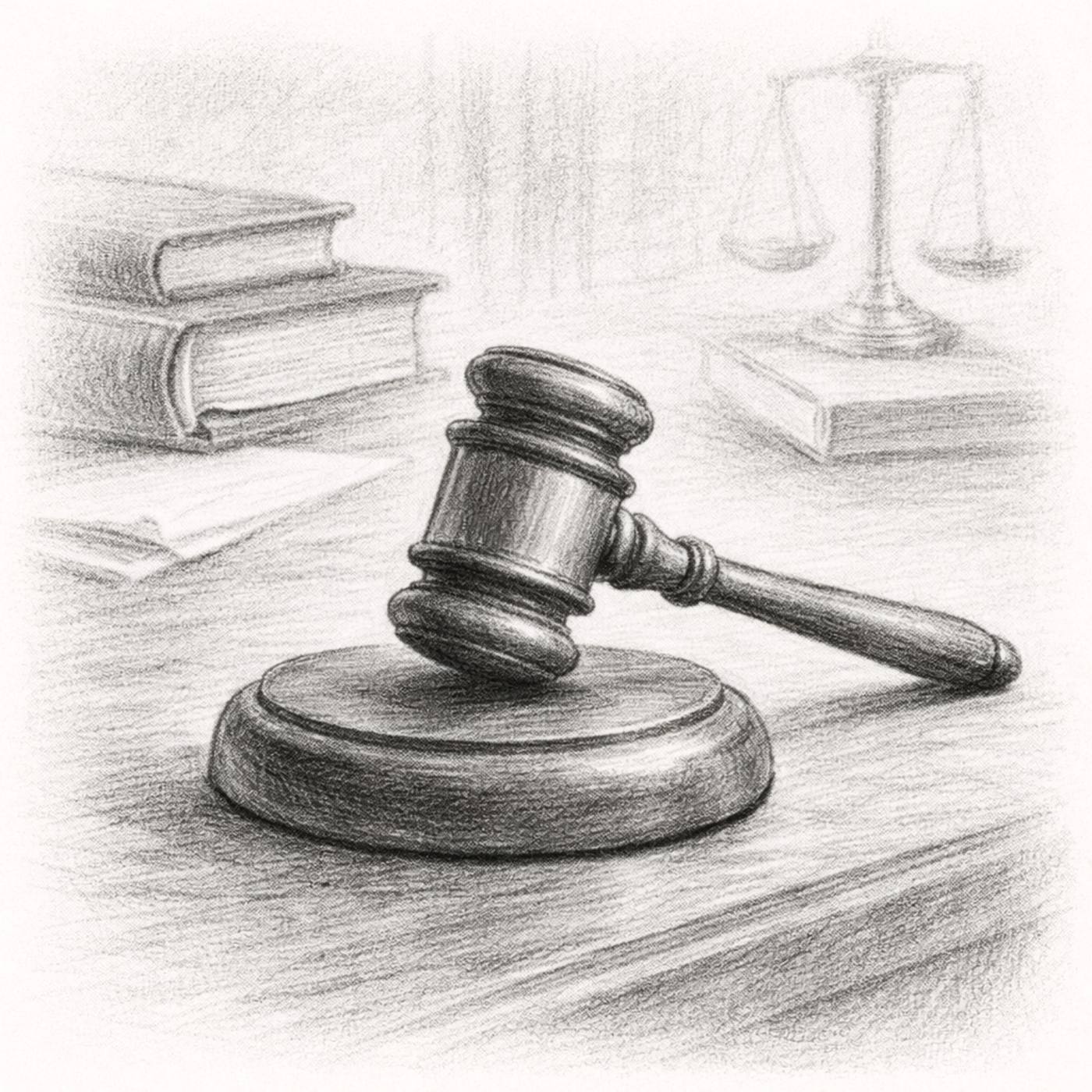
Say: Justification is God declaring the ungodly righteous because of Jesus. The gavel is grace. Say Romans 3:23 and 3:24 as one sentence tonight — week 5 learned the first half. This week is the verdict on the other side of the comma.
- Definition, from the book
- Justification is the judicial act of God in which He declares sinners righteous in His sight, not on the basis of their works, but solely on the basis of Christ’s righteousness imputed to them and received by faith alone.
- In the original language
- Greek dikaioō — to declare righteous. A verdict, not a process of self-improvement.
- Memory verse · Romans 3:24
- And are justified by his grace as a gift, through the redemption that is in Christ Jesus.
Together, open the flashcard for Justification. Say the word, the definition, and the verse once. Then put the phone away.
3 · Open the Bible · 15 min
Romans 4:4–8
Romans 8:31–38 was the reflection reading. Romans 4 shows the mechanism: wages versus gift, and righteousness counted to someone who is ungodly.
Now to the one who works, his wages are not counted as a gift but as his due. And to the one who does not work but believes in him who justifies the ungodly, his faith is counted as righteousness, just as David also speaks of the blessing of the one to whom God counts righteousness apart from works: “Blessed are those whose lawless deeds are forgiven, and whose sins are covered; blessed is the man against whom the Lord will not count his sin.”
Have two readers if you can. Bibles open. The excerpt is only here so a forgotten Bible does not stop the night.
From the passage
1.Paul contrasts wages and gift. Who gets justified in verse 5 — the impressive, or the ungodly? What is “counted” to them?Core
Leader. The ungodly. Faith is counted as righteousness. This is credit, not a paycheck. God justifies the kind of person we actually are.
2.David’s blessing is about what the Lord will not count. How is “not counting sin” different from “you have caught up on your payments”?
Leader. The record is not balanced by later goodness. It is not counted. Forgiveness and credited righteousness belong together.
4 · Around the room · 20 min
A conversation this chapter did not assign
3.Philippians 3:8–9: Paul wants a righteousness that is not his own, but one that comes through faith. What righteousness are you still tempted to hand the Judge as if it were currency?Core
Leader. Ministry fruit, moral improvement since conversion, a doctrinal résumé. Even real fruit is not the ground of the verdict.
4.Romans 5:1 says the justified have peace with God. That is peace of relationship, not a calm personality. What accusation still talks to you as if the gavel had not fallen?
Leader. Let people answer without fixing them in the moment. Then read verse 1 again over the answer.
5.If justification is a declaration, how is it different from sanctification — God making you actually holy over time? Why do we collapse them?
Leader. Collapsed, you think the verdict depends on this week’s progress, or you think the verdict means progress does not matter. Week 27 needs this distinction already planted. One minute is enough.
5 · Say it · 5 min
In one sentence
Justification means God declares sinners righteous as a gift, because of Jesus, received by faith.
Ask for two volunteers, not the whole circle. They may look at the sentence, then try it without looking. Clumsy and true is the goal.
6 · Pray · 8 min
Leave silence between these
- Thank God for a verdict you did not earn.
- Hand Him one false righteousness you keep carrying into court.
- Ask for peace with God to become louder than the accusation.
Before you stumble
“Justified” does not mean “made righteous” in this passage. It means “declared righteous.” Say the word declared more than once. Imputation: our sin counted to Christ, His righteousness counted to us (2 Corinthians 5:21, if you need the second half). Do not sneer at Catholics or at anyone who says “faith and works.” Explain the text in front of you. If someone is crushed, Romans 4:5 is the verse to leave in their hand: He justifies the ungodly.
With students
Use a gradebook. Justification is not extra credit that lifts a 62 to a 70. It is the teacher recording a perfect score that belongs to someone else, with your name on the line, and tearing up the old page. Ask whether that feels unfair. Then say: the Someone else asked for it.
If you still have time
2 Corinthians 5:21. One verse. He was made sin; we become the righteousness of God in Him. Do not over-explain the mystery. Read it twice.