Part V · Our Future·Week 28 of 30
Hope
Before you gather
- Read Day 28, Hope, in The Visual Gospel. Do not reteach the essay.
- Read Hebrews 6:17–20 in your Bible. The excerpt below is only a backup.
- Your people should already have answered the day’s reflection questions. Do not ask those again.
1 · Icebreaker · 7 min
Open the room
What is something you are looking forward to that you are confident will happen, not just something you wish would happen?
Leader. Confidence versus wishing. The book asked how trials reveal where hope lies, and it used Ephesians 1. Do not reopen those. Say that passing is allowed, especially the first few weeks.
2 · The word · 8 min
See it, then say it
If you need the words
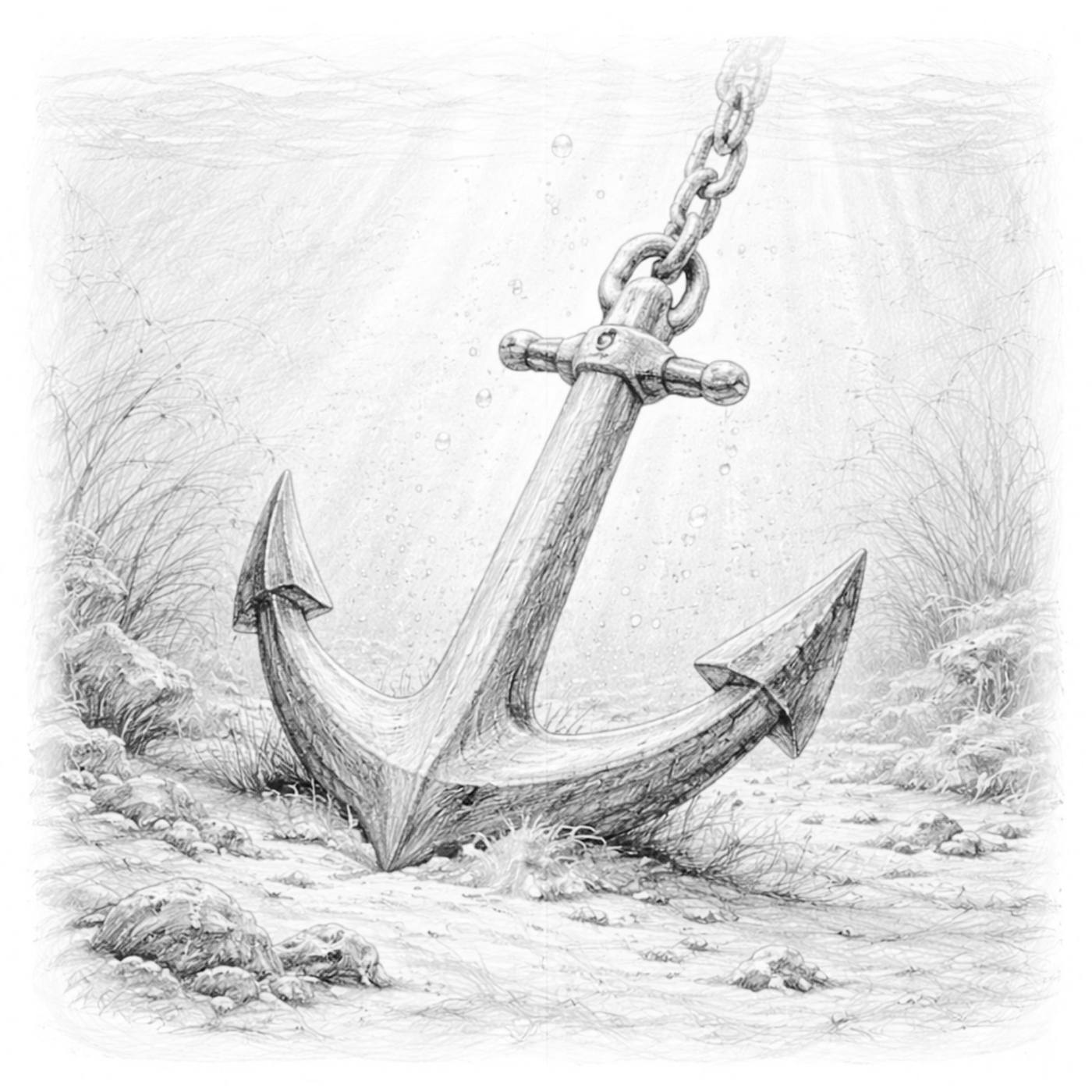
Say: Biblical hope is not “I hope so.” It is an anchor. Hebrews says it goes into the inner place, behind the curtain — into God’s own presence — because Jesus has already gone in. The chain holds when the surface does not.
- Definition, from the book
- Hope is the confident expectation of future good, grounded in the promises of God and secured by the finished work of Jesus Christ.
- In the original language
- Greek elpis — confident expectation, not a wish.
- Memory verse · Hebrews 6:19
- We have this as a sure and steadfast anchor of the soul, a hope that enters into the inner place behind the curtain.
Together, open the flashcard for Hope. Say the word, the definition, and the verse once. Then put the phone away.
3 · Open the Bible · 15 min
Hebrews 6:17–20
Read the memory verse in its paragraph. The anchor is God’s oath and Jesus’ priesthood, not a technique for sad people. Then Romans 8 will take you into groaning, which the journal did not study.
So when God desired to show more convincingly to the heirs of the promise the unchangeable character of his purpose, he guaranteed it with an oath, so that by two unchangeable things, in which it is impossible for God to lie, we who have fled for refuge might have strong encouragement to hold fast to the hope set before us. We have this as a sure and steadfast anchor of the soul, a hope that enters into the inner place behind the curtain, where Jesus has gone as a forerunner on our behalf.
Have two readers if you can. Bibles open. The excerpt is only here so a forgotten Bible does not stop the night.
From the passage
1.What two things make the hope strong, and where does the anchor actually go?Core
Leader. God’s promise and God’s oath — He cannot lie. The anchor enters behind the curtain, where Jesus has already gone. Hope is tethered to a Person in God’s presence.
2.Who is this encouragement for, according to verse 18? What had they done?
Leader. Heirs of the promise who have fled for refuge. Hope belongs to people who needed a place to run, not to people who have it together.
4 · Around the room · 20 min
A conversation this chapter did not assign
3.Read Romans 8:23–25. Paul says we hope for what we do not see, and we wait with patience. How is that different from pretending this week is fine?Core
Leader. Christian hope tells the truth about groaning and still expects the adoption, the redemption of the body. It is not denial.
4.1 Peter 1:3–4 ties living hope to the resurrection and to an inheritance that does not fade, kept in heaven. What are you hoping in that can fade, spoil, or be taken — and what cannot?
Leader. Health, money, a political outcome, a child’s success, even a ministry. Name them without shaming. The inheritance is kept. They are not the anchor.
5.The chain in the drawing goes up, out of the water, where the sailor cannot see the flukes. What does it look like, practically, to “hold fast” a hope you cannot currently see?
Leader. Prayer that tells God the truth, staying with the saints, opening the promise again, refusing a smaller god. Not a smile you wear for the group.
5 · Say it · 5 min
In one sentence
Hope is a confident expectation of future good, anchored in God’s promise and in Jesus, who has already gone in.
Ask for two volunteers, not the whole circle. They may look at the sentence, then try it without looking. Clumsy and true is the goal.
6 · Pray · 8 min
Leave silence between these
- Thank God that He cannot lie.
- Tell Him one groan you are not supposed to pretend away.
- Ask for a hope strong enough to wait.
Before you stumble
Part V begins. Read the opener: the story is going somewhere. Do not use this week to explain anyone’s suffering as a lesson they should have learned faster. Hebrews was written to people in danger of drifting, not to people who needed a scolding. If someone is in real despair, the anchor is Jesus the forerunner, not their ability to feel hopeful before they leave the room. Stay after if you need to.
With students
Ask what they mean when they say “hopefully.” Then ask what Hebrews would require before that word counts as Christian hope. The bar is God’s oath, not their optimism.
If you still have time
Romans 15:13. The God of hope fills you with joy and peace in believing, by the power of the Spirit. A benediction if the night was heavy.