Part I · God’s Heart·Week 3 of 30
Mercy
Before you gather
- Read Day 3, Mercy, in The Visual Gospel. Do not reteach the essay.
- Read Jonah 4:1–2, 10–11 in your Bible. The excerpt below is only a backup.
- Your people should already have answered the day’s reflection questions. Do not ask those again.
1 · Icebreaker · 7 min
Open the room
Tell about a time you braced for a consequence and got kindness instead. One sentence. You can pass.
Leader. Keep it light and short. The devotion already asked about “radical mercy” in depth. Do not turn the icebreaker into that journal question. Say that passing is allowed, especially the first few weeks.
2 · The word · 8 min
See it, then say it
If you need the words
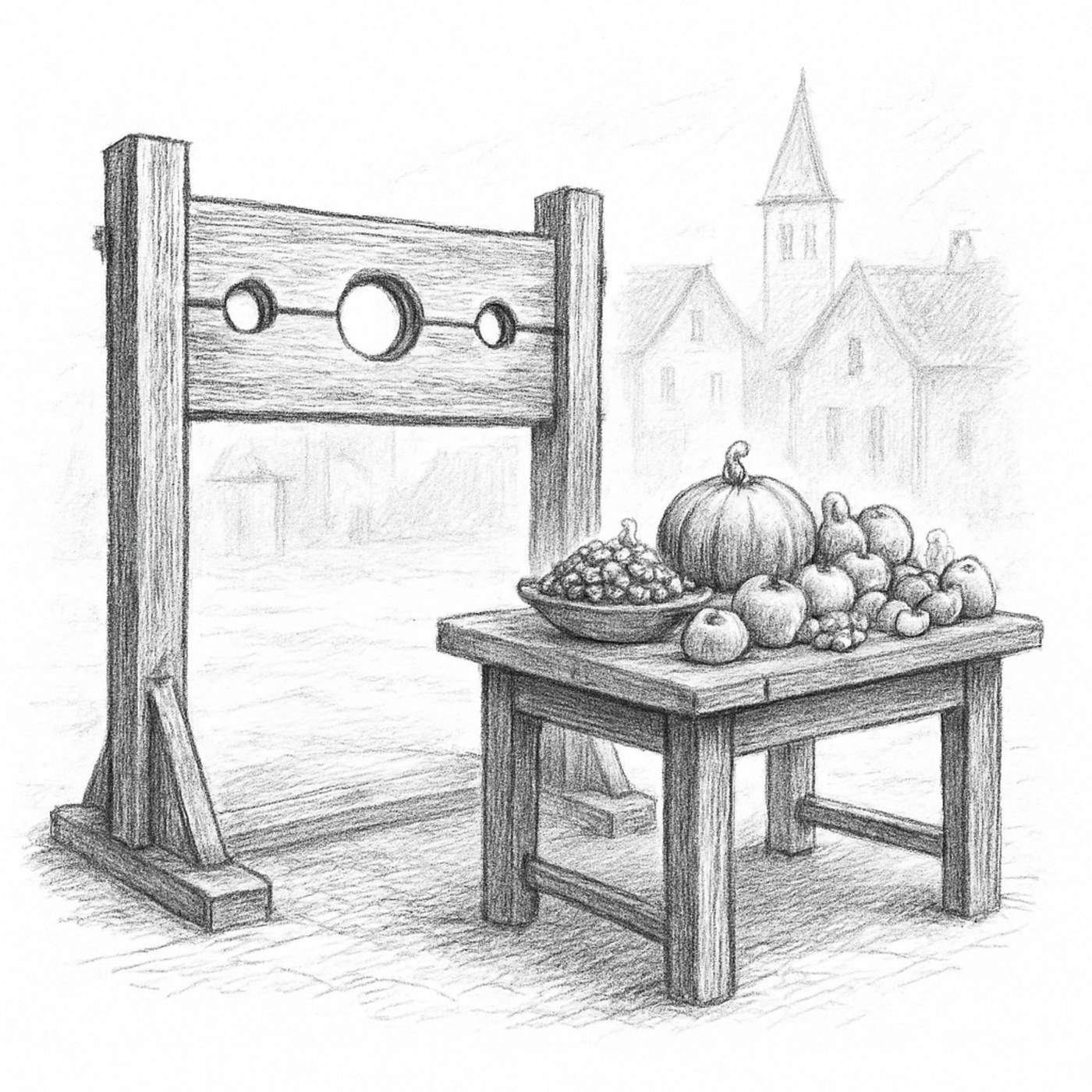
Say: In that square, everyone knows what the guilty person deserves. Mercy does not pretend the stocks were a joke. Mercy withholds the punishment and sets a feast where the rotten fruit would have been.
- Definition, from the book
- Mercy is God’s compassionate withholding of deserved judgment and His tender action toward helpless sinners. It is God’s desire to relieve the consequences of sin in those who deserve condemnation through Christ’s sacrifice.
- In the original language
- Greek eleos — mercy, kindness, goodwill toward the afflicted.
- Memory verse · 1 Peter 1:3
- Blessed be the God and Father of our Lord Jesus Christ! According to his great mercy, he has caused us to be born again to a living hope through the resurrection of Jesus Christ from the dead.
Together, open the flashcard for Mercy. Say the word, the definition, and the verse once. Then put the phone away.
3 · Open the Bible · 15 min
Jonah 4:1–2, 10–11
Jonah is not in the day’s reflection questions. He is angry that God showed mercy. That anger is still in most rooms, aimed at somebody.
But it displeased Jonah exceedingly, and he was angry. And he prayed to the LORD and said, “O LORD, is not this what I said when I was yet in my country? That is why I made haste to flee to Tarshish; for I knew that you are a gracious God and merciful, slow to anger and abounding in steadfast love, and relenting from disaster.” And the LORD said, “You pity the plant, for which you did not labor, nor did you make it grow… And should not I pity Nineveh, that great city, in which there are more than 120,000 persons who do not know their right hand from their left, and also much cattle?”
Have two readers if you can. Bibles open. The excerpt is only here so a forgotten Bible does not stop the night.
From the passage
1.Jonah can quote God’s mercy perfectly. What is his actual problem with it?Core
Leader. He wants mercy for himself and judgment for Nineveh. Right theology, wrong joy.
2.God compares Nineveh to the plant Jonah pitied. What is God saying about the value of people Jonah had written off?
Leader. Jonah grieved a plant. God grieved a city. Mercy sees persons, not categories.
4 · Around the room · 20 min
A conversation this chapter did not assign
3.1 Peter 1:3 ties mercy to a new birth and a living hope, not only to a canceled penalty. What did mercy do for us, beyond “not getting in trouble”?Core
Leader. Mercy is not God looking the other way. It causes new life through the resurrection.
4.James 2:13 says mercy triumphs over judgment. How can a church show mercy without pretending sin is small? Use the drawing if it helps: stocks still standing, fruit on the table.
Leader. Both have to stay in the picture. Mercy that denies the sentence is sentiment. Sentence without mercy is not the gospel.
5.Who is your Nineveh — a group you quietly hope will “get what’s coming”? You do not have to name them. What would good fruit, instead of rotten fruit, look like toward them this week?
Leader. Push for a practice: a conversation, a prayer, refusing a slur, a meal. Not a vague “be nicer.”
5 · Say it · 5 min
In one sentence
Mercy is God not giving us the judgment we had earned, and giving us life instead.
Ask for two volunteers, not the whole circle. They may look at the sentence, then try it without looking. Clumsy and true is the goal.
6 · Pray · 8 min
Leave silence between these
- Thank God that your group is not outside His mercy.
- Confess Jonah’s instinct: mercy for me, payback for them.
- Ask for one concrete act of mercy before you meet again.
Before you stumble
If someone asks the difference between mercy and grace, give it in one sentence and move on: mercy withholds the punishment we deserve; grace gives the feast we could never earn. Next week is the feast. Do not preview it for ten minutes.
With students
Ask where students see “you get what you deserve” treated as the highest justice — online, in sports, at school. Then ask whether they want God to run the world only that way, including toward them.
If you still have time
Luke 6:35–36. Jesus tells disciples to be merciful as the Father is merciful, including toward the ungrateful. Read it only if the Jonah conversation is still thin.