
Part III · Christ’s Work·Week 10 of 30
Incarnation
Before you gather
- Read Day 10, Incarnation, in The Visual Gospel. Do not reteach the essay.
- Read Hebrews 2:14–18 in your Bible. The excerpt below is only a backup.
- Your people should already have answered the day’s reflection questions. Do not ask those again.
1 · Icebreaker · 7 min
Open the room
What is the most ordinary place you have ever met someone who turned out to matter a great deal?
Leader. Ordinary places. The manger is an ordinary place. Do not ask their favorite thing about Christmas. Say that passing is allowed, especially the first few weeks.
2 · The word · 8 min
See it, then say it
If you need the words
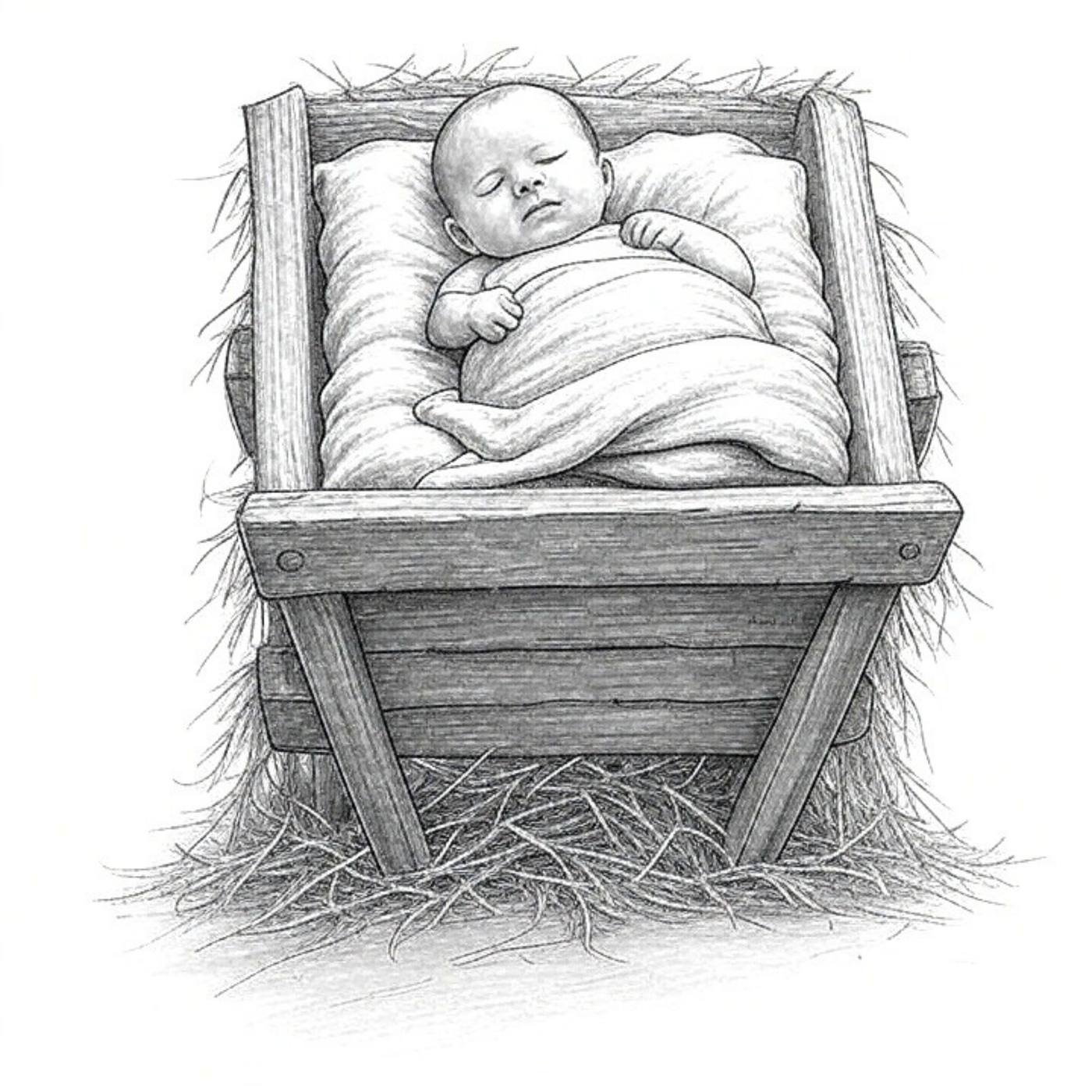
Say: God did not shout the gospel from a safe distance. The eternal Son took a real body, in a real feeding box. Fully God, fully man, one person. Not half and half. Not God in a costume.
- Definition, from the book
- The incarnation is the act of the second person of the Trinity, the eternal Son of God, assuming a full and true human nature, becoming fully God and fully man in one person, Jesus Christ, to accomplish the work of redemption.
- In the original language
- Greek sarx — flesh. The Word became flesh, a real human life.
- Memory verse · John 1:14
- And the Word became flesh and dwelt among us, and we have seen his glory, glory as of the only Son from the Father, full of grace and truth.
Together, open the flashcard for Incarnation. Say the word, the definition, and the verse once. Then put the phone away.
3 · Open the Bible · 15 min
Hebrews 2:14–18
Matthew 1:21 was the devotion’s question. Hebrews 2 tells you why flesh was required: to die, to disarm the devil, and to become a priest who has actually suffered.
Since therefore the children share in flesh and blood, he himself likewise partook of the same things, that through death he might destroy the one who has the power of death, that is, the devil, and deliver all those who through fear of death were subject to lifelong slavery. Therefore he had to be made like his brothers in every respect, so that he might become a merciful and faithful high priest in the service of God, to make propitiation for the sins of the people. For because he himself has suffered when tempted, he is able to help those who are being tempted.
Have two readers if you can. Bibles open. The excerpt is only here so a forgotten Bible does not stop the night.
From the passage
1.Why, according to these verses, did the Son have to share our flesh and blood? Name more than one reason if the text gives it.Core
Leader. To die, to break the devil’s grip, to free people afraid of death, and to be a priest who can really help. Incarnation is for salvation, not for a seasonal feeling.
2.Verse 17 says He had to be made like us “in every respect.” What would be missing if Jesus only appeared human?
Leader. No real death, no real temptation faced, no real priesthood. A costume cannot make propitiation.
4 · Around the room · 20 min
A conversation this chapter did not assign
3.John 1:14 says He “dwelt” among us — He pitched His tent. What does a manger say that a throne, by itself, could not say?
Leader. Nearness. God comes into hunger, night, and poverty. Glory you can see, full of grace and truth.
4.Hebrews 4:15: tempted in every way as we are, yet without sin. Why does it matter, on a hard week, that Jesus is not pretending to understand?Core
Leader. Help is from someone who has been in a body. Do not imply He sinned. The text says the opposite, and that is why His help is clean.
5.Where do we treat Jesus as an idea, a mood, or a distant coach instead of a person who took a real life and still has one?
Leader. Prayer that never addresses Him, a gospel with no resurrection body, worship that wants a feeling more than a Lord.
5 · Say it · 5 min
In one sentence
God the Son took on a real human life so He could live, die, and rise for us.
Ask for two volunteers, not the whole circle. They may look at the sentence, then try it without looking. Clumsy and true is the goal.
6 · Pray · 8 min
Leave silence between these
- Worship Jesus as God and as brother.
- Bring Him a temptation someone in the room is actually facing. Ask for the help Hebrews 2:18 promises.
- Thank Him for coming near instead of sending instructions.
Before you stumble
This is the first week of Part III. Read the part opener. Correct gently, if needed: He did not become God at Bethlehem or at His baptism. He is the eternal Son who assumed a human nature. He did not stop being God in the manger. If someone is grieving, the priest who suffered is the pastoral gold in this passage. Do not rush past verse 18 to keep the outline.
With students
Ask: “Could Jesus have saved us by staying in heaven and sending a message?” Make them answer from Hebrews 2, not from a slogan. The death requires the flesh.
If you still have time
Philippians 2:5–11, if you want the descent and the exaltation in one sweep. It also gives the group a mind to imitate, not only a doctrine to admire.