Part III · Christ’s Work·Week 20 of 30
Covenant
Before you gather
- Read Day 20, Covenant, in The Visual Gospel. Do not reteach the essay.
- Read Genesis 15:7–18 in your Bible. The excerpt below is only a backup.
- Your people should already have answered the day’s reflection questions. Do not ask those again.
1 · Icebreaker · 7 min
Open the room
What is a promise someone kept long after it stopped being convenient?
Leader. Kept promises. Do not ask them to map wedding vows onto Hebrews 13:5. They did that reflection already. Say that passing is allowed, especially the first few weeks.
2 · The word · 8 min
See it, then say it
If you need the words
Say: A covenant is God binding Himself to a people with promises. It is closer to vows than to a contract we negotiate as equals. The new covenant stands because a death has occurred. Jesus is the Mediator of it, and the inheritance is for those who are called.
- Definition, from the book
- A covenant is a divinely established, binding relationship in which God commits Himself to His people with promises and often confirms it with signs and blood.
- In the original language
- Greek diathēkē — a covenant, a binding commitment, a testament.
- Memory verse · Hebrews 9:15
- Therefore he is the mediator of a new covenant, so that those who are called may receive the promised eternal inheritance, since a death has occurred that redeems them from the transgressions committed under the first covenant.
Together, open the flashcard for Covenant. Say the word, the definition, and the verse once. Then put the phone away.
3 · Open the Bible · 15 min
Genesis 15:7–18
God makes a covenant with Abram by walking the aisle of cut animals alone, as a smoking fire pot and a flaming torch, while Abram is in a deep sleep. The devotion used the wedding picture devotionally. This text shows who carries the oath.
And he said to him, “I am the LORD who brought you out from Ur of the Chaldeans to give you this land to possess.” … “Know for certain that your offspring will be sojourners… and they shall come back here.” When the sun had gone down and it was dark, behold, a smoking fire pot and a flaming torch passed between the pieces. On that day the LORD made a covenant with Abram, saying, “To your offspring I give this land.”
Have two readers if you can. Bibles open. The excerpt is only here so a forgotten Bible does not stop the night.
From the passage
1.In the ancient ceremony, both parties normally walked between the pieces, taking the curse on themselves if they broke faith. Who walks in this story? Where is Abram?Core
Leader. God, pictured as fire, walks alone. Abram is asleep. The covenant’s certainty rests on God’s oath, not Abram’s performance that night.
2.God tells Abram the future, including hard years, “for certain.” What kind of promise can talk that honestly about suffering and still be good?
Leader. A sovereign promise. Covenant is not a guarantee that the path will be easy. It is a guarantee that God will do what He said.
4 · Around the room · 20 min
A conversation this chapter did not assign
3.Jeremiah 31:33–34: God will write His law on hearts, be their God, and remember their sin no more. Which of those three promises do you live as if He might withdraw?Core
Leader. Usually the third, sometimes the first. The new covenant is God’s “I will,” not our “we might.”
4.Hebrews 9:15 says a death redeems transgressions committed under the first covenant, so the called receive an eternal inheritance. Why was a new covenant needed at all if the old one already had sacrifices?
Leader. The old exposed sin and pointed forward. It could not finally clear the conscience or secure an eternal inheritance. Christ’s death does. Hebrews 8–10 if someone wants more later.
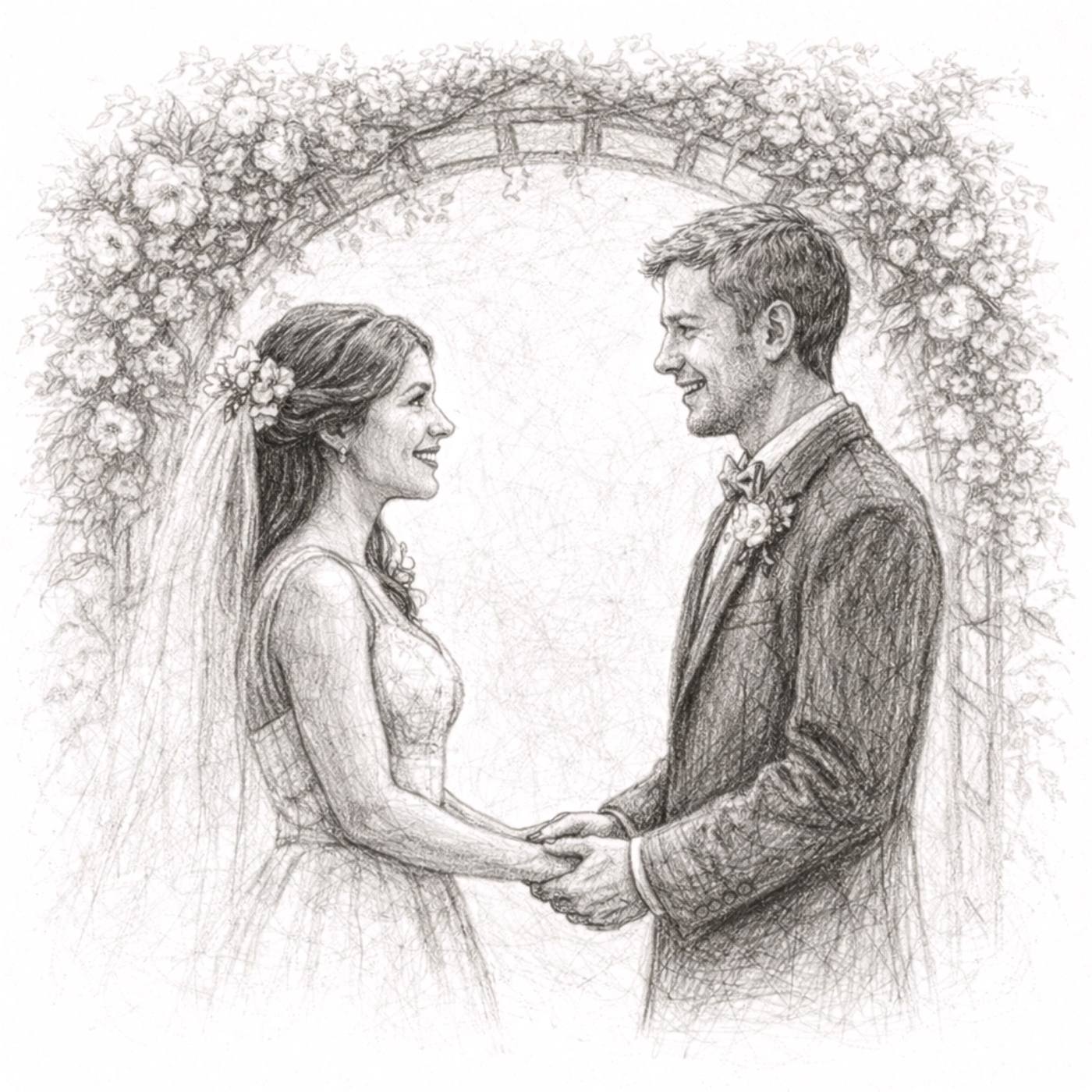
5.The drawing is a wedding. Ephesians 5:25–27 says Christ loved the church and gave Himself up for her. What do marriage vows teach about covenant that a contract does not — and where does the analogy break?
Leader. Vows are personal, exclusive, and lasting. The analogy breaks where we are equal partners earning the relationship. We are the bride He washed. He is not lucky to have us.
5 · Say it · 5 min
In one sentence
A covenant is God binding Himself to His people by promise, and the new covenant stands because Jesus died.
Ask for two volunteers, not the whole circle. They may look at the sentence, then try it without looking. Clumsy and true is the goal.
6 · Pray · 8 min
Leave silence between these
- Praise God for promises that do not depend on our staying awake.
- Ask Him to write His ways on a place in you that still bargains.
- Pray for the marriages and the single people in the room to trust Christ’s vow more than their own.
Before you stumble
Part III ends with this word. Do not imply every Old Testament covenant had the same terms. Abraham’s covenant here is pure promise. Sinai will include commands. The new covenant fulfills both: law on the heart, and a death that secures the inheritance. If the room is new, you do not need that taxonomy. You need: God commits Himself, and Jesus’ blood is why we inherit. End by previewing Part IV in two sentences: the Spirit is how this covenant gets inside a person.
With students
Ask what happens to a group project when only one person is reliable. Then ask why it is good news that God walked the aisle alone. Keep the wedding talk dignified, not joke-driven.
If you still have time
Luke 22:20. “This cup… is the new covenant in my blood.” If you celebrate the Lord’s Supper soon, connect it. If not, simply read the line.