
Part III · Christ’s Work·Week 19 of 30
Forgiveness
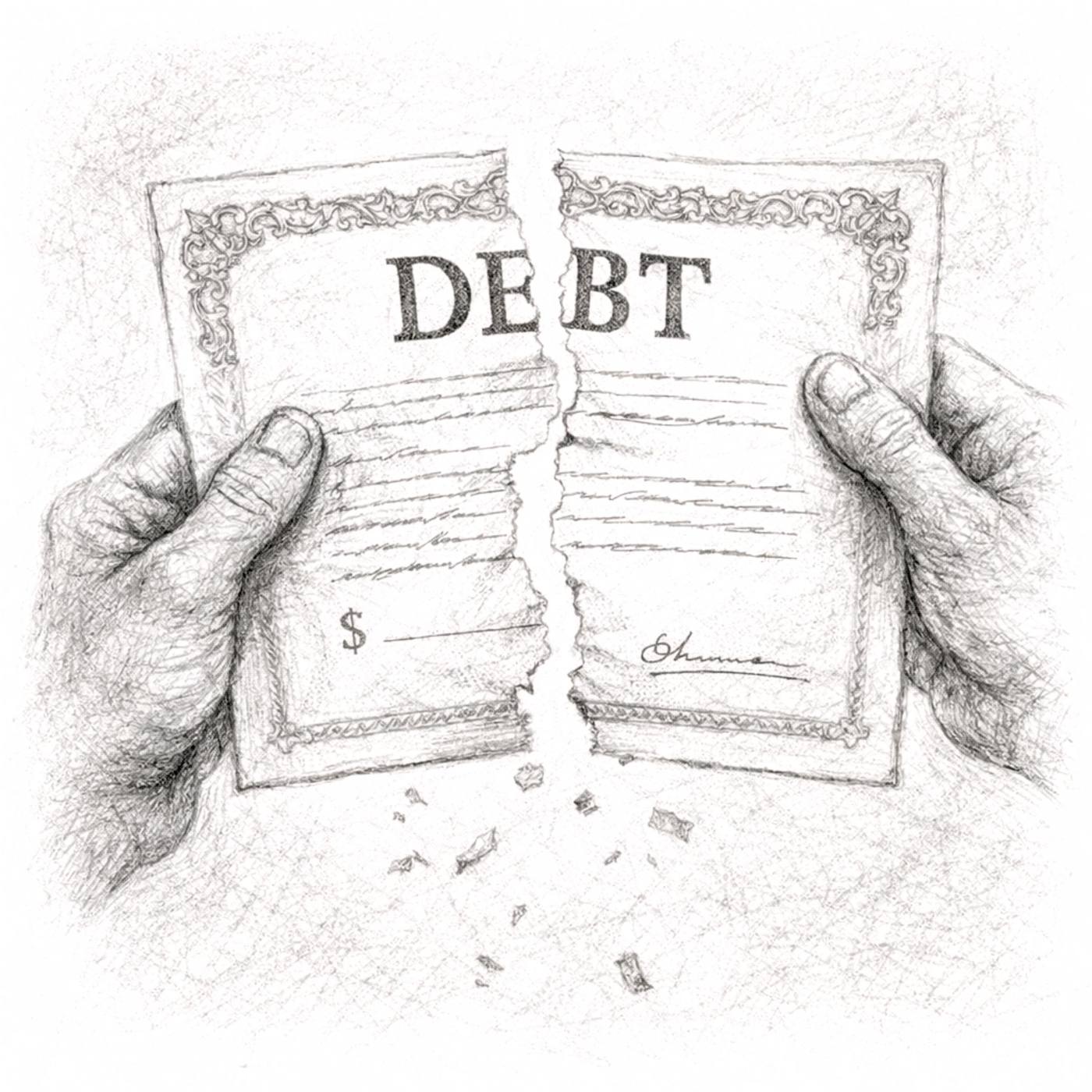
Before you gather
- Read Day 19, Forgiveness, in The Visual Gospel. Do not reteach the essay.
- Read Luke 7:41–48 in your Bible. The excerpt below is only a backup.
- Your people should already have answered the day’s reflection questions. Do not ask those again.
1 · Icebreaker · 7 min
Open the room
What is a notification, a bill, or a reminder you would love to see disappear and never reload?
Leader. Ordinary relief. Do not ask how God’s forgiveness differs from ours. That was the journal. Say that passing is allowed, especially the first few weeks.
2 · The word · 8 min
See it, then say it
If you need the words
Say: Look at the tear. God does not file the debt in a drawer for later. In Christ He cancels it. Forgiveness is release — the word means the debt is let go — because Jesus already paid.
- Definition, from the book
- Forgiveness is the gracious act of God by which He fully pardons sinners of their guilt, cancels their debt of sin, and no longer holds their transgressions against them because of Christ’s work on the cross.
- In the original language
- Greek aphesis — release, pardon, the cancellation of a debt.
- Memory verse · Colossians 1:14
- In whom we have redemption, the forgiveness of sins.
Together, open the flashcard for Forgiveness. Say the word, the definition, and the verse once. Then put the phone away.
3 · Open the Bible · 15 min
Luke 7:41–48
Psalm 103:12 was their reflection text. Luke 7 puts two debts, a table, and Jesus’ own words in the room. Read the short parable and the verdict, not the whole chapter, unless you have time.
“A certain moneylender had two debtors. One owed five hundred denarii, and the other fifty. When they could not pay, he cancelled the debt of both. Now which of them will love him more?” Simon answered, “The one, I suppose, for whom he cancelled the larger debt.” And he said to him, “You have judged rightly.” … And he said to her, “Your sins are forgiven.” Then those who were at table with him began to say among themselves, “Who is this, who even forgives sins?” And he said to the woman, “Your faith has saved you; go in peace.”
Have two readers if you can. Bibles open. The excerpt is only here so a forgotten Bible does not stop the night.
From the passage
1.Both debtors are cancelled, not just the smaller one. What made the difference in their love, according to Jesus?Core
Leader. They both couldn’t pay. The one who knows the size of the cancellation loves more. Forgiveness is the same act. Awareness differs.
2.The table guests ask, “Who is this, who even forgives sins?” Why is that the right question?
Leader. Only the one who holds the debt can cancel it. Jesus is acting as God, not as a therapist who helps her move on.
4 · Around the room · 20 min
A conversation this chapter did not assign
3.Micah 7:18–19: God pardons iniquity and casts sin into the depths of the sea. What do we do with a sin we believe God forgave but we keep retrieving?Core
Leader. Retrieving is unbelief dressed as seriousness. The sea is not a filing cabinet. Be pastoral, not scolding.
4.Ephesians 4:32: forgive one another, as God in Christ forgave you. The standard is not “when they deserve it.” Where are you offering a payment plan to someone Christ already taught you how to release?
Leader. This is not “pretend it didn’t happen.” Cancellation can include truth-telling and boundaries. It cannot include a private ledger you mean to collect.
5.Colossians 1:14 puts redemption and forgiveness in the same breath. Why is “I forgive myself” a thinner sentence than “In Christ we have forgiveness”?
Leader. You are not the lender. Self-forgiveness language often skips the cross. The release comes from the One who was owed.
5 · Say it · 5 min
In one sentence
Forgiveness means God cancels our debt of sin in Christ and does not hold it against us.
Ask for two volunteers, not the whole circle. They may look at the sentence, then try it without looking. Clumsy and true is the goal.
6 · Pray · 8 min
Leave silence between these
- Thank God for a torn record.
- Confess a sin you keep fishing out of the sea.
- Ask for strength to tear up a ledger you have kept on someone else. Silently is fine.
Before you stumble
Do not pressure abuse victims to reconcile with someone dangerous. Forgiveness is releasing vengeance to God. It is not the same as restoring access. Say that if the conversation goes near family harm. Also, Jesus ties great love to a known cancellation. People who feel little may need a clearer look at the debt, not a scolding for being unemotional.
With students
Ask what “we’re good” means after a friend blows up at them. Usually it means “I’ll remember this.” Contrast that with a torn page. Then ask which one sounds like God in Christ.
If you still have time
Isaiah 43:25. “I will not remember your sins.” God is not forgetful. He chooses not to bring them up as charges. Useful if someone fears God’s memory.